Furnace repair and service covers two jobs: fixing a furnace that has stopped or misbehaves, and the yearly check that keeps it running. The fastest way to understand a fault is by symptom. The sections below link each symptom to its usual causes and say which part of it you can check yourself.
This page is organized around what you see and hear. For a rundown of repair versus replacement, see the furnace repair and replacement guide. If your furnace has stopped and you need help tonight, the furnace heating repair page covers first-hour steps and after-hours help.
The thermostat says heat is on but the furnace is not running: why?
The thermostat is sending a call for heat that the furnace is not answering. Usual causes are no power to the furnace, a tripped breaker or switched-off service switch, a dirty filter that tripped a safety limit, a lockout after failed ignition tries or a fault in the furnace control board.
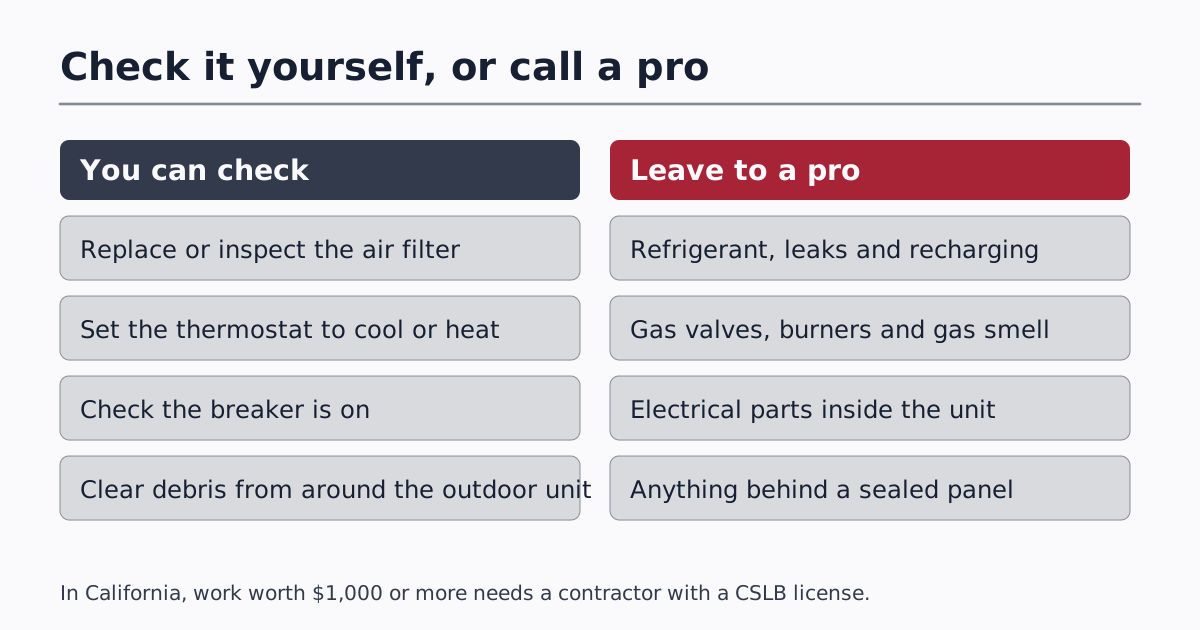
Work through the homeowner-safe checks first:
- Switch the thermostat off, then back to Heat and raise the set point.
- Check the breaker and the service switch near the furnace.
- Replace a clogged filter.
- Look for a flashing code on the control board window, and write it down.
If none of that restarts it, the problem sits inside the cabinet, in the control board, the limit switch or the ignition parts, and needs a technician. A control board costs about $390 to $725 and a limit switch $66 to $122 in the Fixr published furnace guide.
Why does the fan work but the furnace will not heat?
If the fan runs without heat, the blower circuit is fine and the heating sequence is failing. A furnace lights its burners in a fixed order, so a fault at any step stops heat while the fan still runs on the fan switch. Common causes are a failed igniter, a dirty flame sensor or a gas valve problem.
Industry troubleshooting guides and furnace manuals describe the sequence: the inducer motor starts, the pressure switch closes, the igniter glows, the gas valve opens, the flame is detected and the blower starts. If you set the thermostat fan to On, the blower can run without any of that.
What it tells you:
- Fan on, no heat, no igniter glow: the pressure switch or igniter is suspect. See furnace pressure switch repair.
- Igniter glows, burners never light: gas supply, gas valve or igniter position.
- Burners light, then go out: a dirty flame sensor, covered on the furnace flame sensor page.
Gas parts are for a pro. A technician can clean the flame sensor and test the rest.
Why does the furnace light for five seconds and then shut off?
A flame that lights and dies within seconds usually points to a dirty flame sensor that cannot confirm the flame. The control board then shuts the gas valve for safety. Less often the cause is poor gas flow, a weak ground or a draft problem. Most furnaces retry a few times before locking out; check the manual for the count.
After a lockout, the furnace stays off until it resets. Do not keep forcing restarts; repeated failed ignition is what the lockout is there to prevent. Note whether you hear clicking, see a glow or smell gas before the shutdown.
Cost context from the Fixr published furnace guide: a flame sensor repair runs about $68 to $127 with the service call, and an igniter about $96 to $178. If the shutdown comes with a gas smell, move outside and call for help.
What does it mean when the furnace is not igniting its burners?
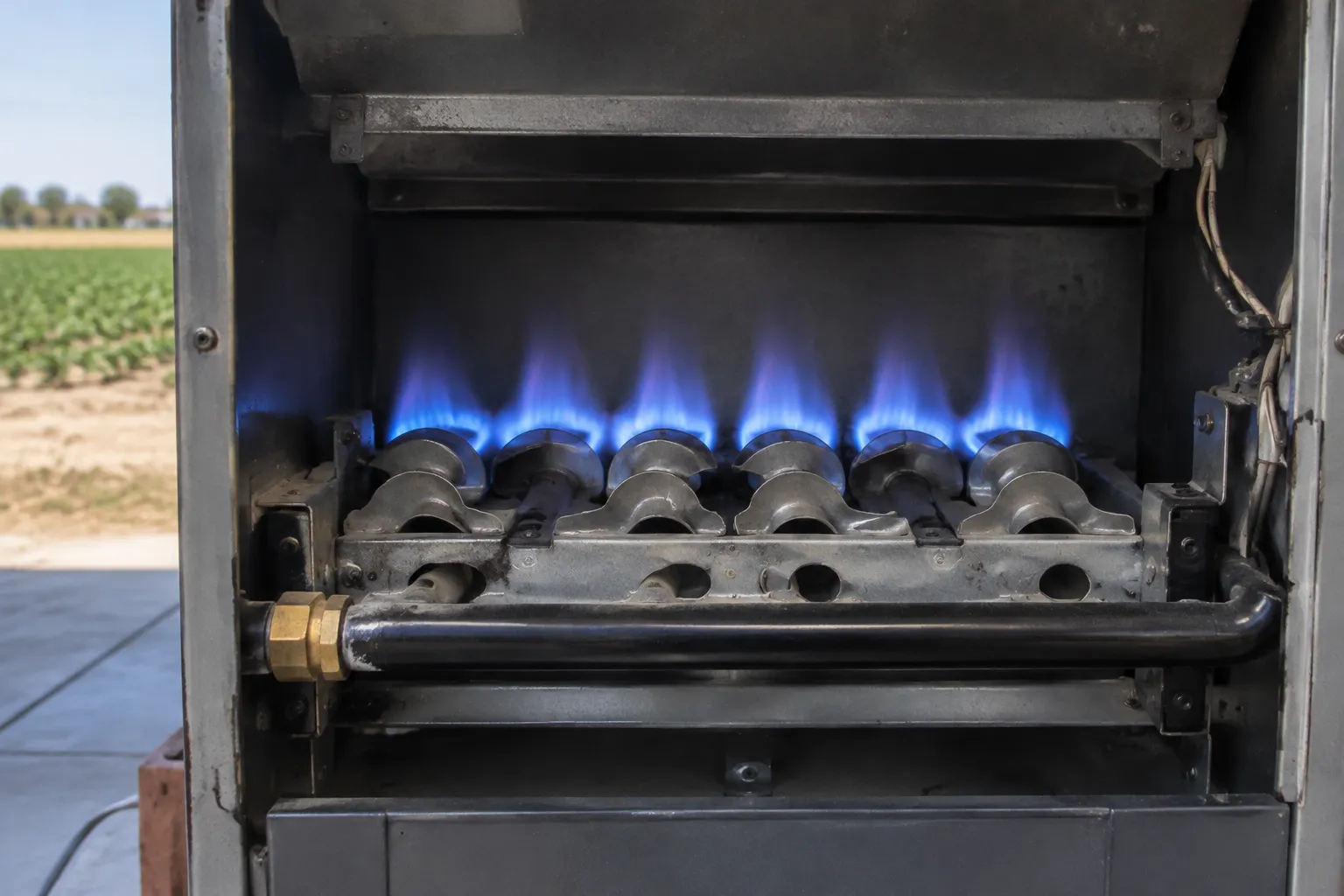
It means the furnace is calling for heat but never gets as far as a flame. The cause is a missing step in the sequence: no draft or airflow proof, an igniter that does not heat, a gas valve that stays shut or a control board that is not sending the signal. A technician tests each step in order.
A few pointers:
- No sound at all: check power and the service switch.
- Inducer runs, no glow: the pressure switch or igniter. High-efficiency furnaces can have a clogged condensate trap that keeps the pressure switch open.
- Glow, no flame: gas supply or valve.
Burner and gas work should only be done by a contractor holding a CSLB license in the right classification. The C-20 class covers warm-air heating systems including flues, controls and filters. When you request quotes, ask which of these specific parts the business suspects and why.
Who repairs furnaces: a company, a specialist or a contractor?
All three terms point to the same thing: an HVAC business whose work on warm-air heating falls under California's C-20 classification. A company is the business, a specialist is the person who focuses on heating and a contractor is the business that signs the work. What matters is the CSLB license, not the word on the van.
Compare on these points:
| Check | What to look for |
|---|---|
| License | Active CSLB license, searchable at cslb.ca.gov |
| Scope | Furnace and gas work, not only AC |
| Quote | Written, parts and labor itemized |
| Fees | Diagnostic fee, and whether it is credited |
| Warranty | What parts and labor cover, in writing |
California requires a CSLB license for HVAC work valued at $1,000 or more in labor and materials. Splitting one job into smaller invoices does not get around the license requirement, so treat it as a warning sign. Quotes through this site come from independent local businesses, so check each one yourself. Request them on the price request form, or start from the HVAC repair quotes home page.
Does furnace duct repair belong with furnace repair?
Duct repair is related but separate. The furnace makes heat and the ducts deliver it, so leaky or crushed ducts can make a working furnace feel weak. Fixr says duct repairs typically add $500 to $4,000 to a project.
If rooms heat unevenly while the furnace runs fine, ask the technician to check the ducts. Whole-house duct replacement costs far more, and the duct replacement cost page covers it. Do not let a furnace repair quote quietly grow into a duct job without a separate written line.
What does annual furnace service include?
CPSC urges a professional inspection of furnaces and other fuel-burning heating systems, chimneys, flues and vents every year. The aim is to catch worn parts and venting problems before the first cold nights arrive. On a gas furnace, a visit also looks at the burners, the flame sensor and, on high-efficiency models, the condensate drain line. A furnace installed years ago and never checked may run less efficiently, which can show up in your energy bills, and a visit from a pro is the way to find out. The full list of what a tune-up covers is on the HVAC maintenance page.
If you are still deciding who to call, read how an AC repair visit runs from the first call to the invoice.
Questions people ask
How long does furnace repair and service take?
A diagnosis time depends on the fault, and a simple fix such as a flame sensor can follow in the same visit. A part on order stretches it to another day. A yearly service visit is usually shorter than a repair, since it is a check, not a hunt for a fault.
What should I ask before I hire someone for furnace repair and service?
Ask for the CSLB license, a written quote, the diagnostic fee and whether it is credited, and what the warranty covers. Ask which parts they suspect from your symptoms. A business that explains the sequence and names the part is a better fit than one that offers a figure over the phone.
Do I need to be home for furnace repair and service?
Yes, at least to let the technician in and approve the quote. Gas and electrical work happens inside your home, so an adult should be present or have agreed the details of access in writing. Keep pets away from the furnace area.
Can a furnace run if the thermostat is the problem?
No, a furnace follows the thermostat's call for heat. If the thermostat has dead batteries or sits in a wrong mode, the furnace never starts. Replacing a thermostat is a smaller job than most furnace repairs. See thermostat replacement for the options.
Sources
- CSLB, C-20 Warm-Air Heating, Ventilating and Air-Conditioning classification
- CSLB, What Kind of Contractor Do You Need?
- CPSC, Stay Safe While Staying Warm This Winter (2024)
- Industry furnace troubleshooting guides and manufacturer manuals, checked Nov 2026
- Fixr published furnace repair cost guide, checked Nov 2026
Last updated