Water leaking from an AC is usually one of three things: a clogged condensate drain line, an evaporator coil that froze and is now melting, or a cracked or corroded drain pan. Switch the system off at the thermostat first, because running it while it leaks can turn a small problem into ceiling or floor damage. For related symptoms like noises and smells, see AC leaks, noises and smells.
A little water outside near the line or pad on a humid day can be normal. Water inside the house, pooling under the indoor unit or dripping from a ceiling, is not.
Why is water leaking from my AC unit?
Water leaks from an AC because the moisture it pulls out of your air has nowhere to go. Carrier names the most common causes as a clogged condensate drain line, a frozen evaporator coil, often from a dirty filter, melting into the pan, and a damaged or corroded drain pan.
Your air conditioner removes humidity as it cools. That water drips off the indoor coil into a pan and drains away through a line, usually to a floor drain, a pipe or outside. Anything that blocks that route, or that sends extra water into the pan, causes a leak.
| Cause | What it looks like |
|---|---|
| Clogged drain line | Water in or around the pan, sometimes a wet spot near the air handler |
| Frozen coil | Ice on the coil or lines, weak airflow, then a flood when it thaws |
| Cracked or rusted drain pan | Slow drip, stains below the unit, often in older systems |
| Dirty filter or blocked return | Frozen coil followed by water |
| Disconnected or damaged drain pipe | Water outside the line, or a wet wall or ceiling |
What should I do first when my AC is leaking?
Turn the AC off at the thermostat, then deal with the water. Carrier advises not using the AC while it is leaking. Soak up standing water with towels, move anything valuable away, and check the filter. If water is near electrical equipment, switch off the breaker for the unit.
Then work through these steps:
- Thermostat off. Leave it off until the cause is known.
- Contain the water. Towels, a wet-dry vacuum or a bucket under a drip.
- Check the filter. A clogged filter can freeze the coil. The steps for swapping one are in how to change a furnace filter.
- Look for ice. If the coil or lines are frosted, let it thaw fully. Do not chip it, since Trane warns that can cause damage.
- Check the thermostat. If the display is dim or the settings looked wrong, replace the batteries.
- Look at the drain pan and line outlet, only where you can see them without opening panels.
If water returns within a day after these steps, stop and get a quote. Water leaks tend to repeat until the cause is fixed.
Why is my AC leaking water inside the house?
Water inside the house usually means the indoor part of the system, the coil, pan or drain line, has a problem. It is worth acting on quickly because water can damage ceilings, drywall, insulation and flooring, and it can create conditions for mold.
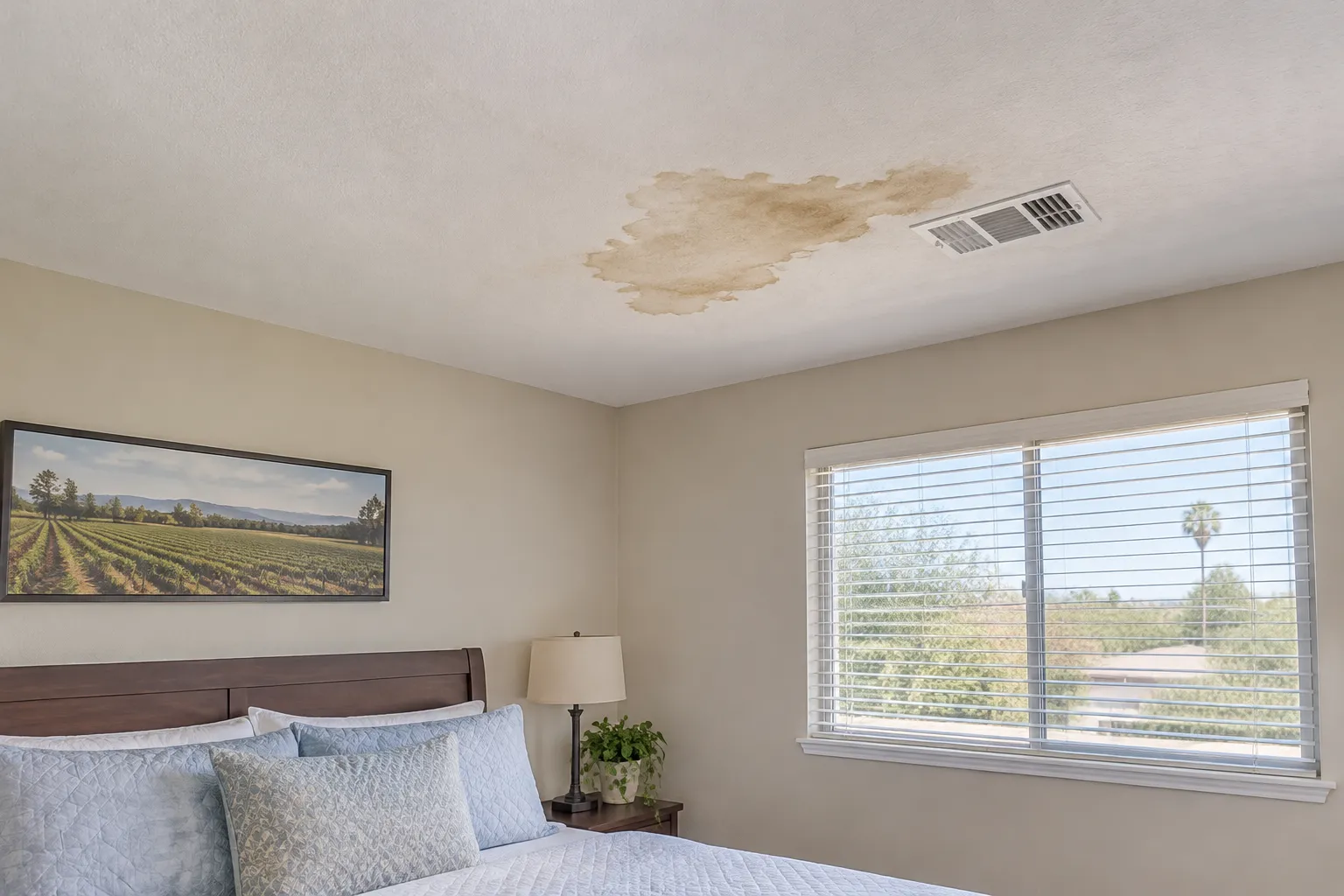
Typical places to see it:
- Under or around the indoor unit or furnace cabinet: often a clogged line or full pan.
- From a ceiling or wall below an attic unit: the pan overflowed or the line is blocked.
- From a vent or register: condensation from ducts or a coil melting heavily.
- Near the furnace: many homes put the coil above the furnace, so a leak can look like a furnace problem.
Do not ignore small drips. A slow leak that stains a ceiling usually means the pan or line has been struggling for weeks.
Why is my AC leaking water outside?
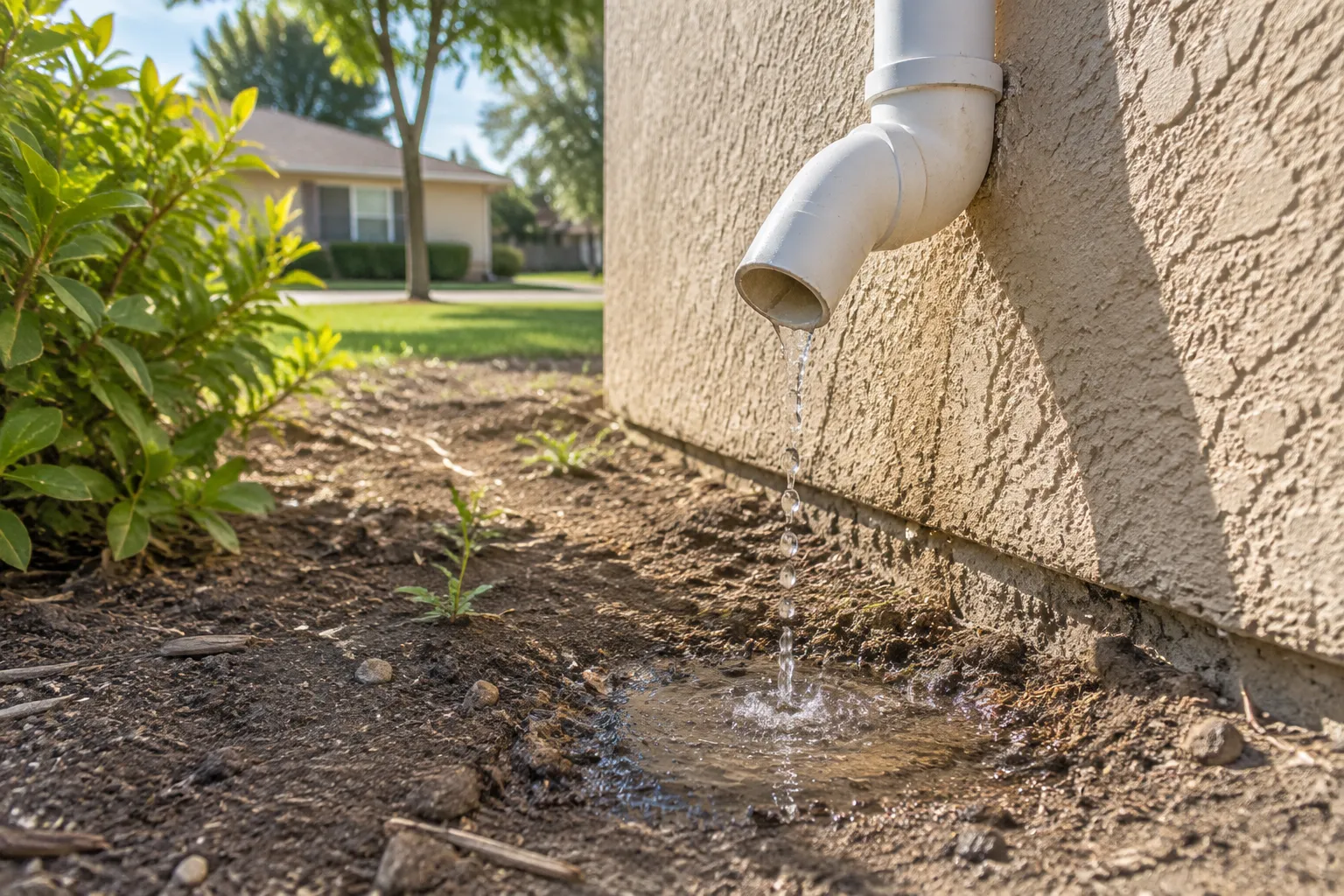
Water outside is often normal. The drain line discharges condensate near the house, and on a humid or very hot day you may see a wet patch or a drip from a small pipe. That is the system doing its job.
Look closer when:
- Water pools against the foundation or runs toward the house.
- The outdoor unit itself is leaking, not just the drain pipe. Outdoor units do not normally produce large amounts of water.
- The outdoor unit is iced up. Ice on the outdoor part can point to airflow or refrigerant trouble.
- The drain pipe is cracked, disconnected or sagging.
If you are unsure whether a drip is normal, take a photo and note when it happens. A specialist can usually tell from a description and a picture.
What does it mean when water leaks a lot?
A lot of water means a major blockage or a coil that froze and thawed. Heavy leaking after a frozen coil is common, because the ice stored up cooling for hours before it melted. A large steady flow means the drain is fully blocked or the line has failed.
Repeated heavy leaks suggest the underlying cause has not been fixed. A frozen coil points back to airflow or refrigerant, so it is worth reading the pages on AC freezing up and AC blowing warm air. Low refrigerant means there is a leak, and under EPA Section 608 only technicians with EPA Section 608 certification, or their employers, may buy refrigerant for stationary AC equipment, and knowingly venting it is prohibited.
How much does it cost to fix a leaking AC?
Clearing a clogged condensate drain or cleaning a coil depends on access and labor, so ask for the part and labor on separate lines. Fixr's AC repair guide (January 2026) lists an evaporator coil at $400 to $2,700, and diagnostic or service calls at $75 to $250.
A badly corroded pan, damaged ductwork or water damage to the home add to the bill, and these figures are national, not Modesto prices. The AC leaking repair cost page goes through the ranges in more detail.
Compare quotes where you can. Ask whether the diagnostic fee comes off the repair and whether the drain line will be flushed and the pan checked for rust. Check any contractor's CSLB license at cslb.ca.gov.
When should I call a specialist about a leak?
Call when the leak returns after you have changed the filter and let the coil thaw, when water reaches ceilings or electrical equipment, or when the pan or line looks damaged. Leaks that keep coming back almost always need a drain, coil or pan repair.
Do not wait on any of these:
- Water staining or sagging in a ceiling.
- A coil that freezes again after a clean filter.
- A musty smell, which can mean water sitting where it should not.
- The system tripping a breaker after a leak.
The home page lists the other AC and furnace topics. To request quotes, use the price request page.
Questions people ask
How long does it take to fix an AC water leak?
Clearing a clogged condensate line is often a one-visit job that takes an hour or two. A damaged pan, a replaced coil or a refrigerant leak can take longer, and a part order adds days. Ask for an estimate in the written quote.
What should I ask before I hire someone to fix an AC water leak?
Ask for the CSLB license number and look it up at cslb.ca.gov. Ask what the diagnostic fee covers, whether the drain line and pan will both be checked, and whether any damage to the home is outside the quote. Ask how they will prevent the clog returning.
Do I need to be home for an AC leak repair?
Yes, an adult should be home. The specialist needs access to the indoor unit and you should approve any changes to the work. You can also point out where the water appeared so they can trace the path.
Is a leaking AC dangerous?
Water itself is not the main danger. The risks are electrical, if water reaches wiring or the breaker box, and damage, since leaks can soak insulation and drywall. Turn the system off, keep water away from electrical equipment and call for a quote.
Can I keep using my AC if it only leaks a little?
It is better not to. Carrier advises against running the AC while it leaks. A small leak is often an early sign of a blocked line, and the next hot afternoon can turn it into a flood. Switch it off and have it checked.
Sources
- Carrier: why is my AC leaking water
- Trane: evaporator coil is frozen
- Fixr AC repair cost guide (January 2026)
Last updated