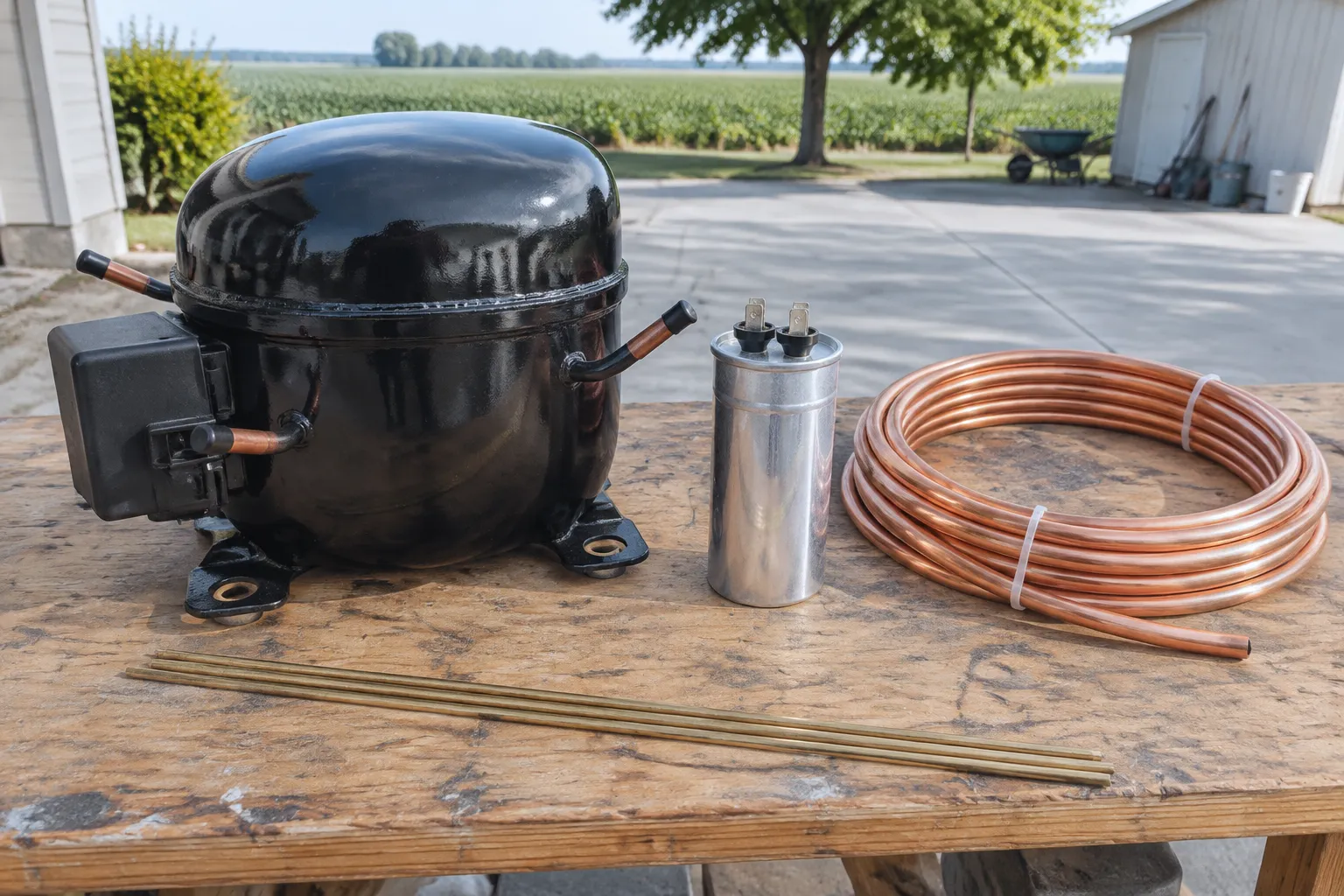
Air conditioner compressor repair is rarely a single-part job. When the compressor is replaced, the work often touches the capacitor, the refrigerant and a few small parts in the sealed refrigerant circuit. Knowing what belongs in the job helps you read a quote and spot one that leaves things out. This page is about the job itself: what gets replaced alongside the compressor, how the work runs, and when to replace the capacitor. For the parts overview, see AC parts: compressor, capacitor, condenser, refrigerant.
What else gets replaced when you replace an AC compressor?
Alongside the compressor, a specialist typically replaces or checks the capacitor, the contactor, the refrigerant charge and a small filter drier that catches moisture and debris in the lines. After a burnout, the lines may also need cleaning. What is included depends on why the old compressor failed.
Here is how each item usually fits in:
- Capacitor: a new compressor often gets a new capacitor, because a weak one is a common reason compressors struggle and overheat. Carrier notes that a failing capacitor struggles to keep the compressor running, so the unit can shut off and restart rapidly. A full replacement runs about $100 to $400 per Fixr's AC repair guide (January 2026).
- Contactor: the switch that sends power to the compressor. If its contacts are pitted, it can be replaced in the same visit. Ask for the part and labor on separate lines.
- Filter drier: a small canister in the refrigerant line. Because the system is opened, it is commonly replaced. Ask for it by name in the quote.
- Refrigerant: the charge is recovered, then added back. Some of it may need replacing, which affects the price.
- Cleaning after burnout: if the old compressor burned out, acid and debris can be left in the lines. Specialists may flush the lines or fit extra filtration.
You do not need to memorize this. You need to see that the quote lists the items and says why each is there.
How does a compressor replacement job run from start to finish?
A typical replacement runs in this order: diagnose and confirm the failure, recover the refrigerant, remove the old compressor, fit the new one and the small parts, test the lines for leaks, pull a vacuum, recharge the system, and run the AC to check pressures and cooling. The order protects the new part.
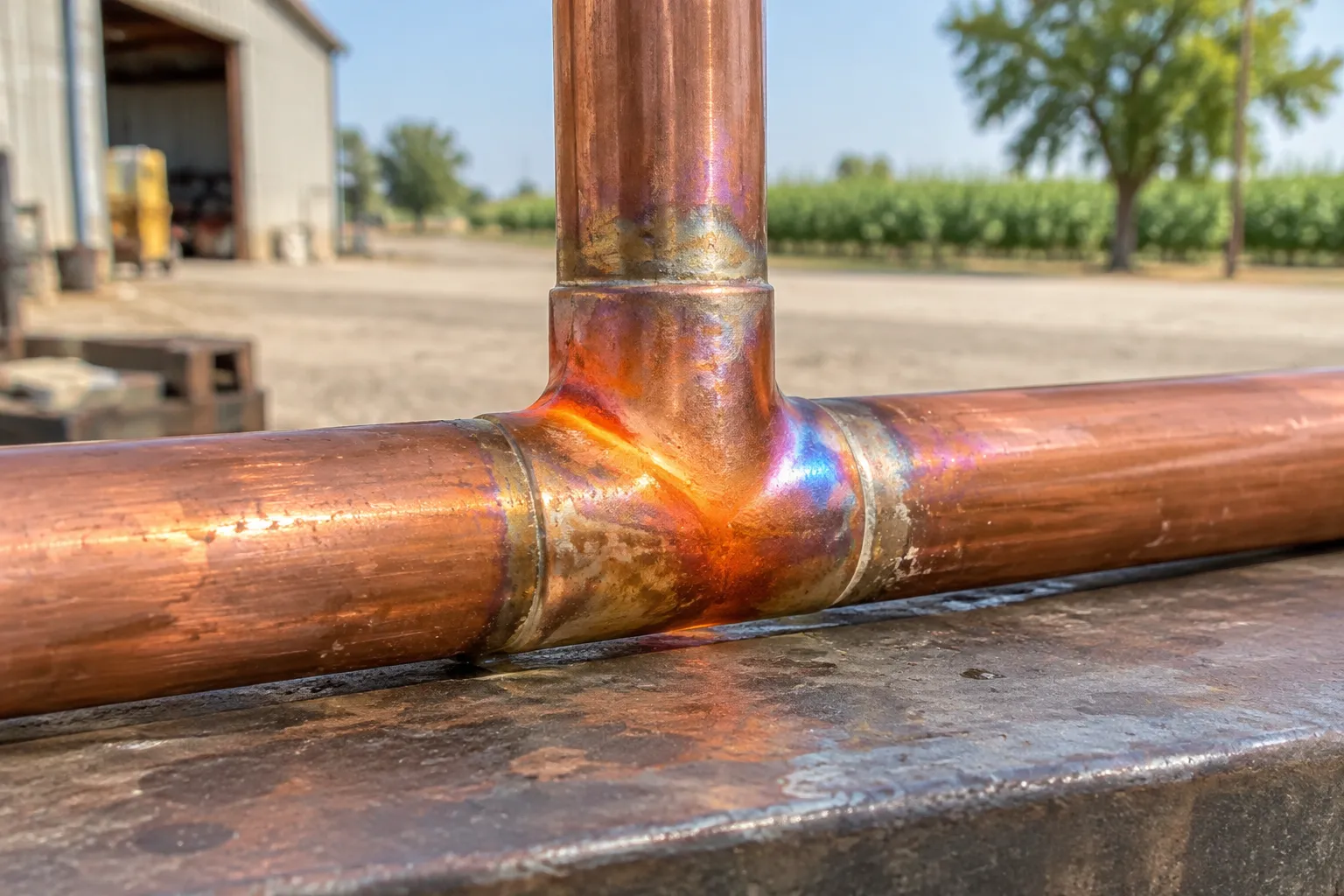
Some detail on the steps that matter most to you:
- Confirmation. The specialist tests the capacitor, contactor and motor windings before condemning the compressor. This is the step that stops an unnecessary compressor quote.
- Refrigerant recovery. Federal rules prohibit knowingly venting refrigerant, so it is captured, not released. This is one reason the work has to be done by someone with EPA Section 608 certification.
- Replacement and brazing. The old unit is cut out and the new one joined in with brazing, a high-heat metal joint.
- Leak test and vacuum. Moisture is the enemy of a refrigerant circuit, so the system is pumped down before refrigerant goes back in.
- Recharge and test. The charge is set to the manufacturer's specification, and cooling and electrical readings are checked.
Ask the specialist to explain the order in your own words. A confident answer is a good sign.
When should you replace the AC capacitor?
Replace the capacitor when a technician finds it weak or failed, or when the unit shows signs of one: a humming outdoor unit that will not start, a fan that needs a push to spin, or warm air with the blower running. It is also common to replace it when the compressor is replaced.
The capacitor is a small part with a big job. It gives the compressor and fan motors the jolt they need to start, and it wears out with heat and age. A failing capacitor is often cheaper than the damage it causes if left alone, because a compressor that strains to start runs hot.
Do not test or replace it yourself. Carrier says capacitor repair should typically be handled by a qualified HVAC professional, because capacitors can hold a dangerous charge even with the power off. If you see a bulging or leaking capacitor, switch the AC off at the thermostat and call.
If the capacitor is the only problem, you are looking at the lowest price tier. The HVAC capacitor replacement cost page lays out those ranges in detail.
When is a compressor-only swap the wrong choice?
A compressor-only swap is the wrong choice when the old one burned out and left the lines contaminated, when the unit is old enough that other parts are about to fail, or when the outdoor unit and indoor coil would not be a good match. In those cases, a new outdoor unit or a full system may be the better value.
A few factors tilt it:
- Age. Carrier's lifespan table lists 15 to 20 years for central AC, and it suggests considering replacement after about 10 years.
- Refrigerant type. New residential AC equipment made after January 2025 uses newer A2L refrigerants such as R-454B or R-32. EPA's May 2026 final rule removed the January 1, 2026 installation deadline for most residential R-410A systems made before 2025; check EPA's Technology Transitions page and local rules. Ask the specialist which refrigerant your unit uses and what that does to the quote.
- Matching. The outdoor unit and the indoor coil are designed to work as a pair. Ask whether a replacement outdoor unit is compatible with your existing coil.
- Cost. If the compressor job passes about half the price of a new system, replacement is worth pricing out. The page on replacement HVAC cost gives the new-system ranges.
Do you need a permit for compressor work?
Possibly. Stanislaus County's planning fee schedule lists HVAC and wall or floor furnace permit fees. Confirm the current amount with the county before budgeting. Whether a like-for-like swap inside Modesto city limits needs one was not confirmed, so ask the building department before work starts.
A specialist who pulls permits regularly will know. Ask directly, and ask who is responsible for it. The same goes for the contractor license: California requires a CSLB license for labor and materials of $1,000 or more, and a compressor job almost always crosses that line. Check the license at cslb.ca.gov or call 800-321-CSLB (2752); the HVAC license class is C-20.
If you want several prices for the same job, request quotes here. Quotes come from independent local businesses, and a written quote should list each of the items above. For other HVAC help in town, see HVAC repair in Modesto.
Questions people ask
Should I replace the capacitor and contactor at the same time as the compressor?
Often yes, because they are cheap compared with the compressor and sit in the same circuit. A weak capacitor or a worn contactor can stress a brand-new compressor on day one. The specialist should test both. If they pass, leaving them in is reasonable, but ask why the quote does or does not include them.
Is a new compressor alone cheaper than a new outdoor unit?
The part alone is the smaller number, though published guides vary widely and Fixr lists compressor work at $600 to $3,000 (January 2026) in total. But a new outdoor unit comes with a fresh warranty and a clean circuit. Ask for both prices on one visit so you can compare the total, not just the part.
Can I buy refrigerant and replace the compressor myself?
No. Under EPA rules, only technicians with EPA Section 608 certification, or their employers, may buy refrigerant for stationary AC equipment, and knowingly venting it is prohibited. Compressor work also involves recovering the old charge, brazing, and electrical work. It is a job for a specialist with a CSLB license.
What should the written quote show?
It should list the compressor, the capacitor, the contactor, the filter drier, the refrigerant type and amount, the labor, any permit cost, and the warranty on parts and on labor. A single lump sum with no breakdown makes it hard to compare two businesses. Ask for the breakdown before approving anything.
How do I know when to replace the compressor, not just keep repairing?
Repeat visits are the clearest sign. If the same unit has needed a capacitor, a fan motor and a refrigerant top-up in two seasons, the compressor is often running under stress. Add the unit's age and the quote, and the conclusion usually points to replacement, though only a technician can confirm the failure.
Sources
- Fixr AC repair guide, January 2026
- Carrier, AC capacitor
- EPA, refrigerant sales restriction
- Stanislaus County, building permit fees
Last updated