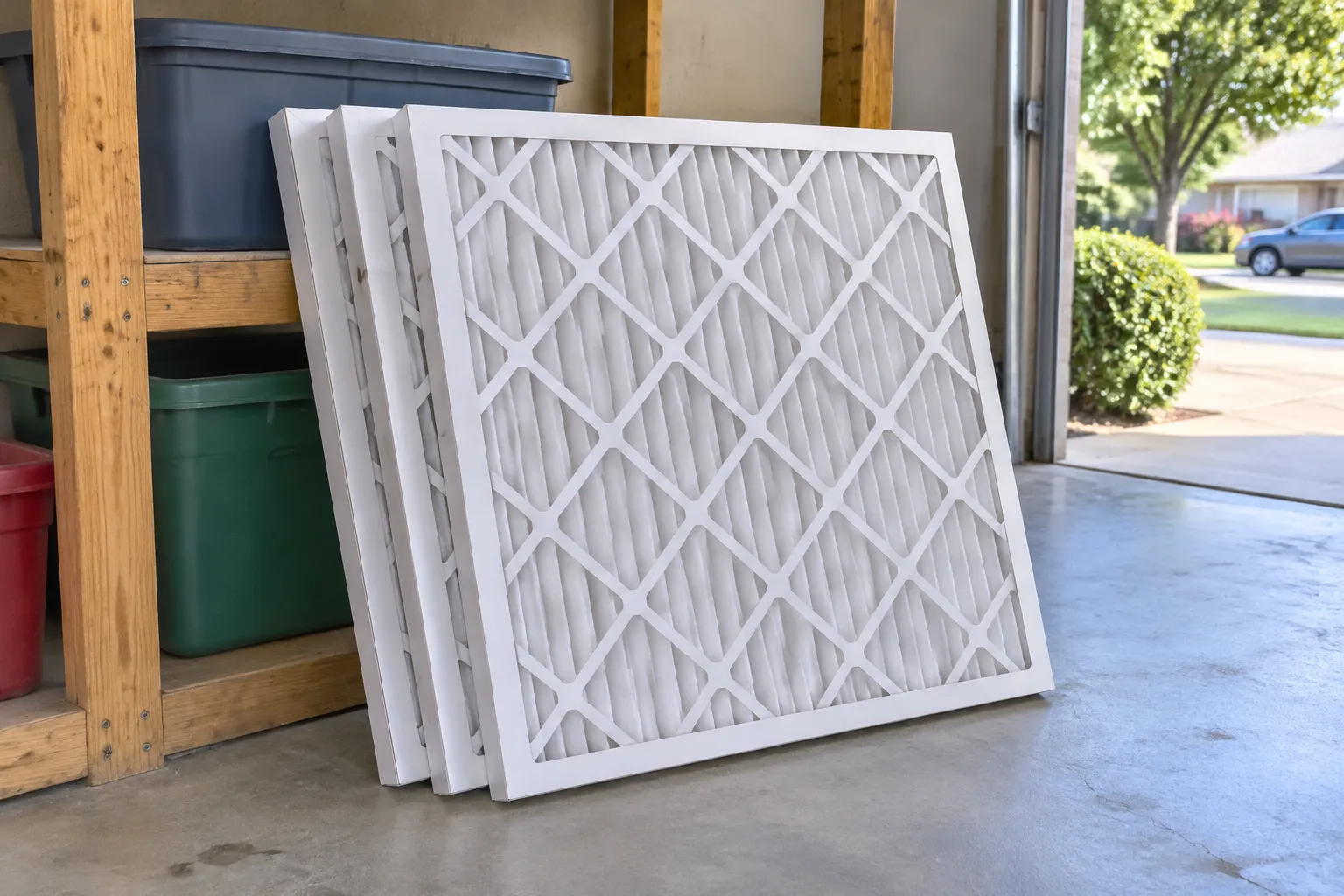
Plan on changing a standard furnace filter every one to three months. Carrier and Trane both give that range, and the lower end applies when the filter is cheap, the house is dusty or the system runs a lot. Trane puts it at every 1 to 3 months depending on filter quality. For repair-level problems beyond filters, see furnace repair and replacement.
This page is about timing and type, not the physical steps. If you have never done it, the how-to is on the step-by-step furnace filter page. Here you will find a schedule you can adjust for Modesto's dust, wildfire smoke seasons, long hot summers and pets.
How often should I change my furnace filter?
Check it monthly and change it every one to three months. A thin, cheap filter may need replacing at the one-month mark. A better-quality or thicker filter can go toward three months, if it still looks clean when you check. Never go by the calendar alone: look at the filter.
Start with this table and adjust:
| Your situation | When to check | Likely change |
|---|---|---|
| Thin, basic filter, no pets | Monthly | About every 1 to 2 months |
| Pets that shed | Every 2 to 4 weeks | About every 1 month |
| Dusty area, open windows, nearby farm fields or construction | Every 2 to 4 weeks | About every 1 month |
| Better-quality pleated filter | Monthly | Up to about 3 months |
| Thick 4-inch media filter | Monthly | About 6 to 12 months, per Carrier |
| Heavy use in a heat wave or cold snap | Every 2 to 3 weeks | When it looks gray |
| Vacant house or light use | Every month | Every 3 months or on schedule |
These are practical rules of thumb built from the 1 to 3 month manufacturer range. Your furnace maker may print a different interval in the manual, and its instructions come first.
How do I know it is time to change the filter?
Hold the filter up to a light. If you cannot see light through the media, or it looks gray and furry, change it. Other signs are weaker airflow from vents, a furnace that runs longer than it used to, and more dust on furniture. A filter that looks fine from the front can still be loaded on the back.
Set a reminder that is easy to keep, such as the first of every month. Write the install date on the frame. If you buy filters in packs, keep a spare near the furnace so the job does not wait for a store trip.
A clogged filter restricts airflow. Carrier notes that restricted airflow can make a system overheat and shut down as a safety step, and a dirty filter is also a leading cause of a frozen coil in cooling season. That means the filter matters twice a year: before the first cold snap and before the first heat wave.
Does the Central Valley change how often I should replace it?
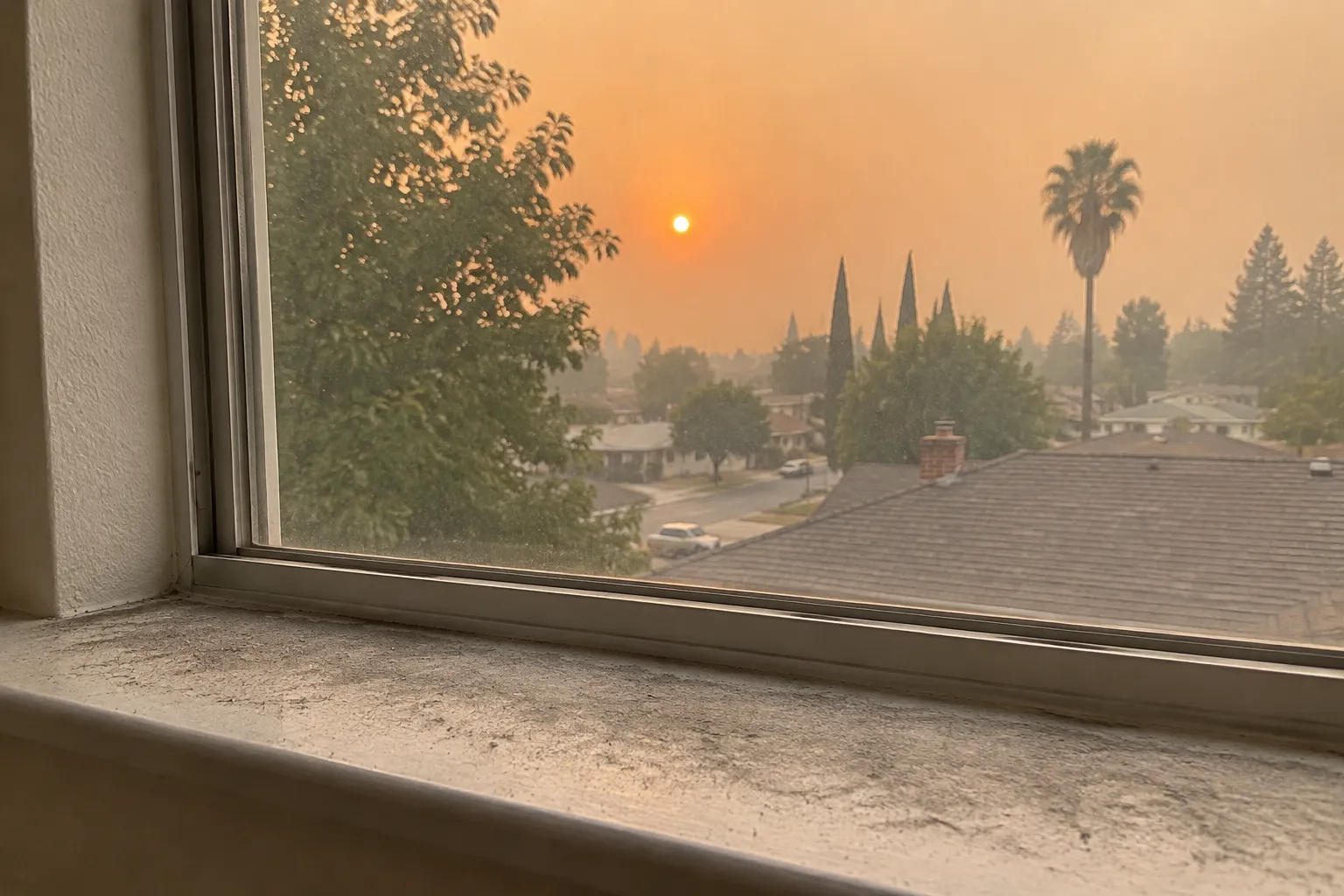
It can. The San Joaquin Valley, which includes Stanislaus County, is still designated nonattainment for some federal PM2.5 and ozone standards. No source reviewed for this page ties that to a specific filter interval, so treat this as common sense, not a rule: more airborne dust and smoke means more load on the filter, so check it more often.
Practical points for Modesto and the surrounding towns:
- Smoke events. When wildfire smoke or local burning drifts in, the filter loads faster. Check it after a smoky stretch, not on the next scheduled date.
- Dust and agriculture. Homes near orchards, fields, unpaved roads or construction collect more dust. Check monthly at least.
- Heat. Long summers mean the blower runs a lot. The same filter often serves your air conditioner, so it works year-round, not just in winter.
- Open windows. Mild spring and fall days bring pollen and dust inside.
Modesto summer highs average around 95 F in July, and from 2017 to 2026 Modesto logged between 12 and 45 days a year at or above 100 F, per Extreme Weather Watch (the 2026 count is incomplete), so your blower and filter are busy for months. Winter is milder, with a January average high near 56 F.
What type of filter should I buy?
Match the size printed on your current filter, then choose a rating your furnace can handle. MERV is the rating scale for how small a particle a filter catches. A higher number catches finer dust, but it can restrict airflow more. Your manual or a specialist can tell you the highest rating your system accepts.
Rough guide to types:
- Basic flat panel filters are inexpensive and protect the equipment, but catch the least and need frequent changes.
- Pleated filters catch more and are the usual choice for homes.
- Thick media filters, such as a 5-inch cabinet, offer more surface area, can restrict airflow less at the same rating and often last longer between changes. Carrier says 4-inch media filters can last about 6 to 12 months; check them monthly and follow the label. The usual size is written like 20x25x5, and it only fits a cabinet built for it.
- Higher-rating filters suit allergy or smoke concerns, if the blower can handle the added resistance.
Do not stack two filters to catch more dust. It restricts airflow in the same way a clogged filter does and can hurt energy efficiency and raise energy bills.
What changes if I have pets, allergies or someone with asthma?
More shedding and finer particles mean a shorter interval and possibly a higher-rated filter. For pets that shed, check every two to four weeks and replace at the first sign of gray. For allergy or asthma concerns, ask a specialist which rating your system can run without losing airflow.
A filter helps with particles that pass through the furnace. It will not remove every allergen or odor, and it does nothing for gases. A filter is also not a substitute for a working carbon monoxide alarm. Fuel-burning heat should still be inspected by a professional each year, as the CPSC recommends.
Keep supply vents and returns clear, vacuum around returns and avoid running the system with the filter removed.
What about specific brands, like a Heil furnace?
The brand does not change the basic schedule, but it can change the filter size, the cabinet and the rating limit. Check the manual for your furnace, whether it is a Heil, Carrier, Trane or another make, and follow its filter instructions. The model number on the label tells you which manual to look up.
Some systems use a filter in the return grille, others use a slot at the furnace, and some have a media cabinet with a thick filter that is changed once or twice a year. If yours is a media cabinet, the manual gives its interval. If you cannot find the model information, a specialist can read the label during any visit.
When does a filter problem become a repair?
If the furnace short-cycles, shuts off, blows cold or flashes a code after a fresh filter, it has a repair problem. The same goes for a filter that goes dirty unusually fast or a burning smell that does not fade. Get a written quote and check the contractor's license at cslb.ca.gov.
Fixr's furnace repair guide (updated August 2025) lists a typical range of $349 to $650. See furnace repair and service for what a visit includes, or send a request on the price request page. The home page lists all the heating and cooling guides.
Questions people ask
How long does a furnace air filter change take?
About five minutes for a standard filter once you have the right size. A media cabinet can take a few minutes more because the door and filter are bigger. The time is mostly in finding the slot the first time.
What should I ask before I hire someone to change a furnace air filter?
Most households do it themselves. If a specialist is already visiting, ask them to show you the filter size, rating and slot, and to say which rating your furnace can handle. Ask whether the filter is included in the visit price.
Do I need to be home for a furnace air filter change?
If you do it yourself, no one else is involved. If someone else does it, an adult should be home to show them the slot and approve any other work they suggest.
How often should I change a 20x25x5 furnace filter?
Carrier says 4-inch media filters can last about 6 to 12 months; check them monthly and follow the label. A 5-inch filter is similar in design, but pets, dust and smoke shorten the interval, so change it when it looks gray.
Can I change the filter in summer too?
Yes, and you should. The same filter usually serves the air conditioner, and a clogged one can freeze the coil. Keep checking monthly through summer, especially in a heat wave when the system runs almost constantly.
Sources
- Carrier: AC short cycling
- San Joaquin Valley Air Pollution Control District FAQ
- Fixr HVAC repair cost article, published national cost guide, checked Nov 2026
- CPSC: stay safe while staying warm
Last updated