You can safely clean and check four things on your own HVAC system: the air filter, the vents and returns, the area around the outdoor unit and the thermostat. You can also reset a heater or air conditioner once by turning it off and on at the thermostat and breaker. Anything inside the cabinet, near gas or involving refrigerant or electrical parts is for a specialist. The HVAC repair home page lists the full set of heating and cooling topics for Modesto.
This page is the do-it-yourself side of keeping a system running: what to clean, what to reset, how to set a thermostat for cooling and how to keep a room cooler without the AC. The professional side, an annual visit and what it covers, is on the page about maintenance and tune-ups.
What can I safely clean on my HVAC system?
Clean or replace the filter, wipe and vacuum the vents and returns, clear debris from around the outdoor unit and keep the thermostat clean and out of direct sun. These are the DIY limits. Do not open the cabinet, spray the coils with chemicals, or reach into the furnace.
A simple checklist:
- Filter. Replace it every 1 to 3 months depending on the filter, per Carrier and Trane. Steps are on the page about changing a furnace filter step by step.
- Vents and returns. Vacuum dust from the grilles and keep furniture, rugs and curtains clear of them.
- Outdoor unit. Turn the power off first. Pull weeds, leaves and trash from around it and keep a clear space on all sides. Do not hose the fins at high pressure.
- Thermostat. Replace batteries if it has them and keep it away from sun, lamps and drafts.
- Condensate area. Look at the drain pipe outlet and the area below the indoor unit for water or algae, and report anything unusual rather than digging into it.
Duct cleaning, coil cleaning and anything involving the blower are not DIY. Fixr's maintenance guide lists professional duct cleaning at $300 to $700.
How do I reset my house heater?
To reset a heater, turn the thermostat to off, wait a minute, then set it back to heat and a few degrees above room temperature. If your furnace has its own power switch, turn that off and on too. Reset once. If it fails again or keeps locking out, stop and call for a quote.
Some furnaces also have a small reset button on the blower housing or the control board, but location varies by model and opening panels is not a homeowner job, so check your manual. Many furnaces lock out after a few failed ignition tries and flash a code; check the manual for the count. A repeat lockout is the furnace protecting itself, often from restricted airflow or a failed part.
Before resetting, check the filter and the thermostat. If you smell gas, leave the house and call 911 or your gas utility. Do not try to reset anything.
How do I reset my air conditioner?
Turn the thermostat to off, wait about five minutes so the system can settle, then turn it to cool and set it below the room temperature. If the system trips the breaker or does not start, check the filter and the breaker once, then stop.
Waiting a few minutes matters. Switching an AC off and on quickly can stress the compressor. If the coil has ice on it, leave the system off until it thaws. Trane says not to chip ice off a frozen coil.
A reset is not a repair. It clears a temporary glitch at most. If the air conditioner needs resetting often, the cause is something else, such as a clogged filter, a thermostat fault or an electrical part. Read about AC not cooling and freezing up if it keeps happening.
How do I reset the AC breaker, and is there a reset button outside?
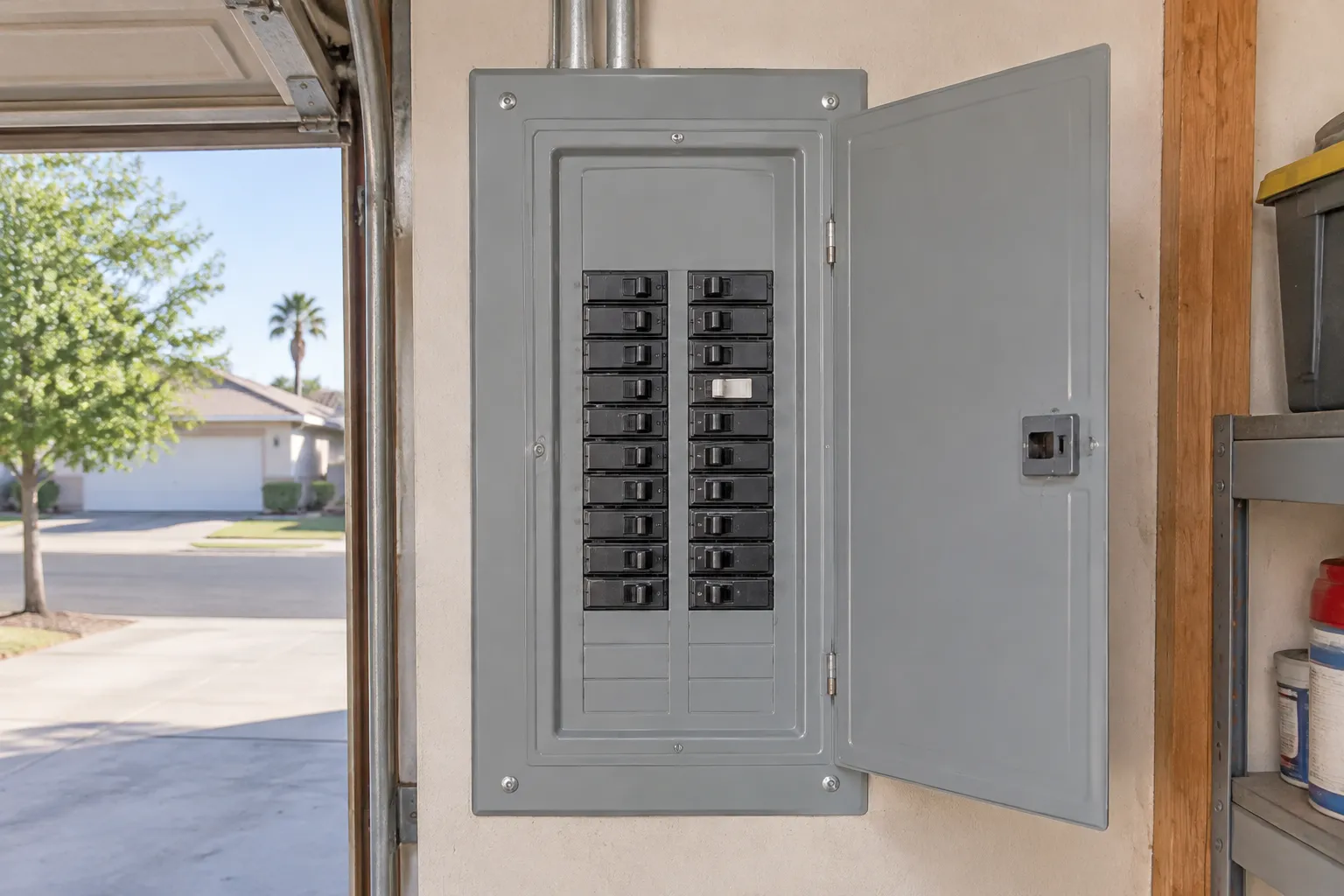
Find the breaker labeled for the air conditioner, switch it fully off, wait a moment, then switch it fully on. Try it once. If it trips again, do not keep trying. A breaker that repeatedly trips is protecting against an electrical fault, and it needs a specialist.
On the outdoor unit, there is usually a disconnect box on the wall nearby. Some units have a reset button or high-pressure switch inside the cabinet, but opening the cabinet is not a DIY task. Capacitors can hold a charge even with the power off, and Carrier notes that a failing capacitor struggles to keep the compressor running, so the unit can shut off and restart rapidly, and capacitor work should typically be handled by a qualified HVAC professional. If your manual shows an accessible reset, follow it. If not, call.
Never use a bigger breaker to stop the tripping. That removes the protection.
How do I turn on or set the AC for cooling?
Set the thermostat to cool, set the fan to auto, and choose a temperature a few degrees below the room reading. Very low settings do not cool faster. The system runs at the same speed and just runs longer, which uses more energy.
A simple routine:
- Check that the thermostat has power and shows the right time.
- Choose the cool mode, not heat or auto change-over if you are unsure.
- Set a comfortable temperature and leave it.
- Close the windows and the doors on the rooms you are cooling.
- Give it a few minutes before judging the airflow.
A household that wants lower bills can raise the setting a few degrees when nobody is home. A programmable or smart thermostat can do it automatically. Fixr's maintenance page lists thermostat replacement at $85 to $300. See thermostat replacement if yours is failing.
How do I cool a room without AC?
Block the sun, move air and avoid adding heat. Close blinds and curtains on sun-facing windows during the day, run a fan, open windows at night when it is cooler, and cut down on the oven, dryer and other heat sources. These measures take the edge off. They will not replace cooling in a heat wave.
Practical steps for hot Valley afternoons:
- Close blinds on the west and south windows before the sun reaches them.
- Use a fan to move air, and turn it off when the room is empty.
- Open windows at night and in the early morning, then close them as it warms.
- Cook outside or in the morning and run heat-producing appliances after dark.
- Move to the coolest room, usually on the lowest floor and away from the sun.
Modesto's July average high is about 95 F, and from 2017 to 2026 Modesto logged between 12 and 45 days a year at or above 100 F, per Extreme Weather Watch (the 2026 count is incomplete). During extreme heat, check on older neighbors and relatives, and if the AC has failed, get quotes the same day instead of waiting.
Where does DIY stop?
DIY stops at the cabinet door. Refrigerant, capacitors, contactors, gas valves, burners, heat exchangers, motors and control boards are for a specialist. Under EPA Section 608, only technicians with EPA Section 608 certification may buy refrigerant for stationary AC equipment, and in California work worth $1,000 or more needs a contractor who holds a CSLB license.
Signs that you have passed the DIY limit:
- Ice that returns after a filter change.
- Water leaking inside the house.
- Warm air, or an outdoor unit that does not start.
- Noises, burning smells or flash codes.
- A breaker that trips twice.
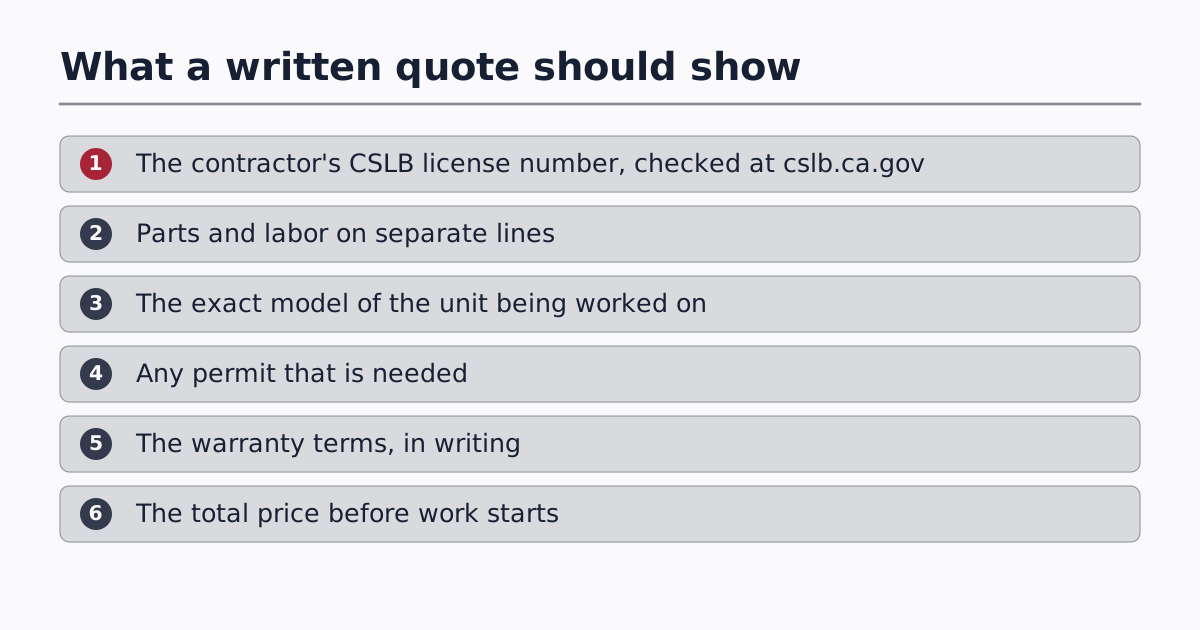
When you reach that point, check the contractor's license at cslb.ca.gov, get a written quote, and compare two if the job is large. For the fastest route, use the price request page.
Questions people ask
How long does it take to clean and service HVAC yourself?
The monthly basics, a filter check, a look at the outdoor unit and a vent wipe, take about 15 minutes. A fuller seasonal check, clearing the outdoor area, vacuuming returns and testing the thermostat, may take an hour. None of it needs tools beyond a vacuum and gloves.
What should I ask before I hire someone to service my HVAC?
Ask for the CSLB license number and check it at cslb.ca.gov. Ask what the visit includes, whether the diagnostic fee comes off any repair, and whether they service both heating and cooling. Get the answers in a written quote.
Do I need to be home for an HVAC service visit?
Yes, an adult should be home to let the specialist in, point out any problems and approve extra work. If you cannot be there, agree the access plan and the approval process before the visit.
Is DIY HVAC repair a good idea?
For filters, thermostat batteries, breaker checks and clearing debris, yes. For anything inside the unit, no. Gas, refrigerant and capacitors carry safety and legal limits, and a wrong fix can void a warranty or make a repair more expensive.
Why does my AC keep tripping the breaker?
A breaker that trips repeatedly points to an electrical fault, such as a failing capacitor or motor, or a unit drawing too much current. Switch the system off and call for a quote. Do not keep resetting it.
Sources
- Trane: evaporator coil is frozen
- Carrier: AC short cycling
- CSLB: What Kind of Contractor Do You Need?
- EPA Section 608 refrigerant sales restriction
- Fixr air duct cleaning guide, published national cost guide, checked Nov 2026
- Fixr AC repair cost guide, published national cost guide, checked Nov 2026
Last updated